Unshackling CEO pay in the UK?
How British small caps have set CEO pay as the IA loosened its guidance

In October 2024 the Investment Association (IA), whose members manage £9.1 trillion, revised its Principles of Remuneration, amid questions about the competitiveness of the UK stock market and its ability to attract executive talent.
The 2021 version asked companies to respect "the principle of paying no more than is necessary". The revised guidance puts greater weight on attracting and retaining talent, and on judging each remuneration proposal on its own merits.
What has been happening at Britain's smaller listed companies over this period? Our new report, Inside CEO Incentives, examines 214 annual reports covering every operating company in the FTSE SmallCap in 2022 or 2025.
Bigger bonus opportunities
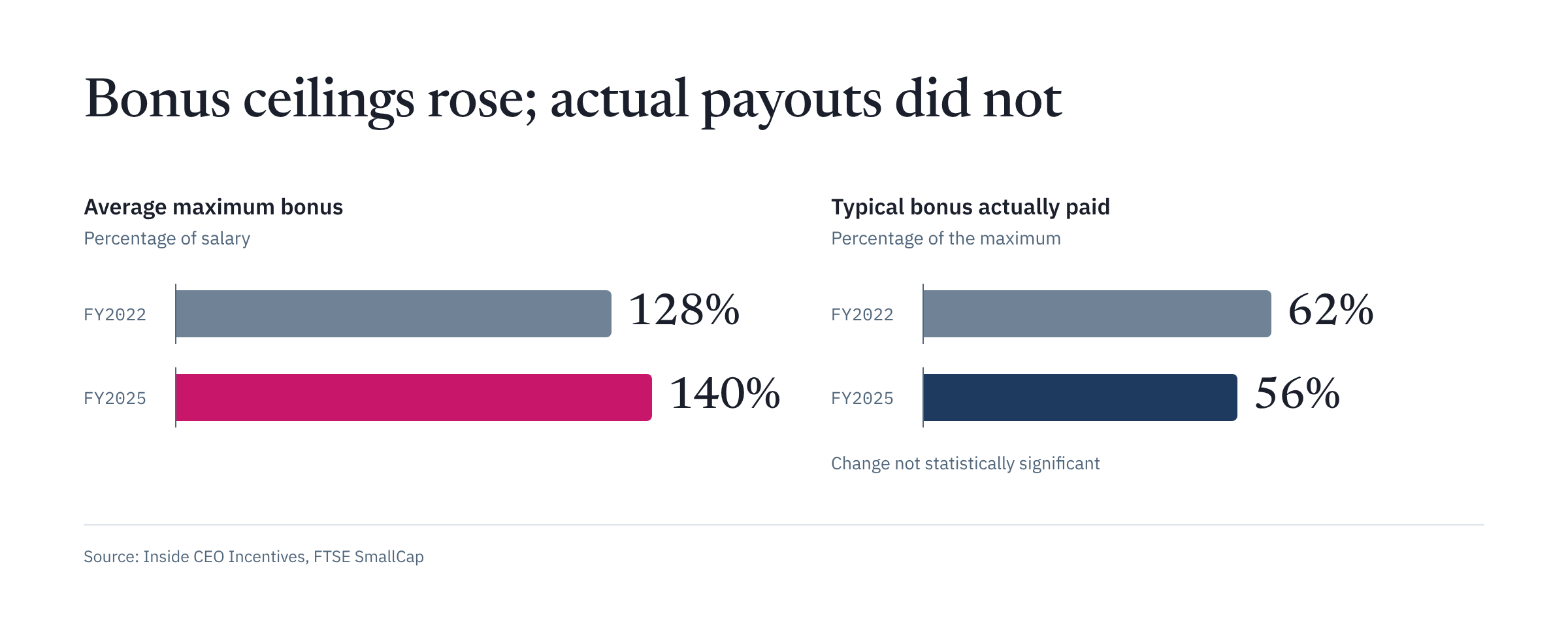
The average maximum annual bonus rose from 128% to 140% of salary between FY2022 and FY2025. Among companies in the index in both years, 13 raised their CEO's bonus maximum and one reduced it.
Bigger bonus opportunities have not translated into higher bonus payouts. Fixed pay also grew relatively slowly: CEO salaries rose by 11%, against an 18% increase in average UK earnings.
Financial measures still dominate
The 2021 guidance expected financial measures to make up the significant majority of the bonus. The revised guidance no longer states this expectation. SmallCap boards have kept the balance: financial measures account for about 70% of the bonus, as in FY2022, and profit appears in nine out of ten plans.
More room for judgement
The 2021 guidance was also explicit about targets: "All measurements must be quantifiable." The revised guidance accepts qualitative targets, provided committees explain how they will be assessed.
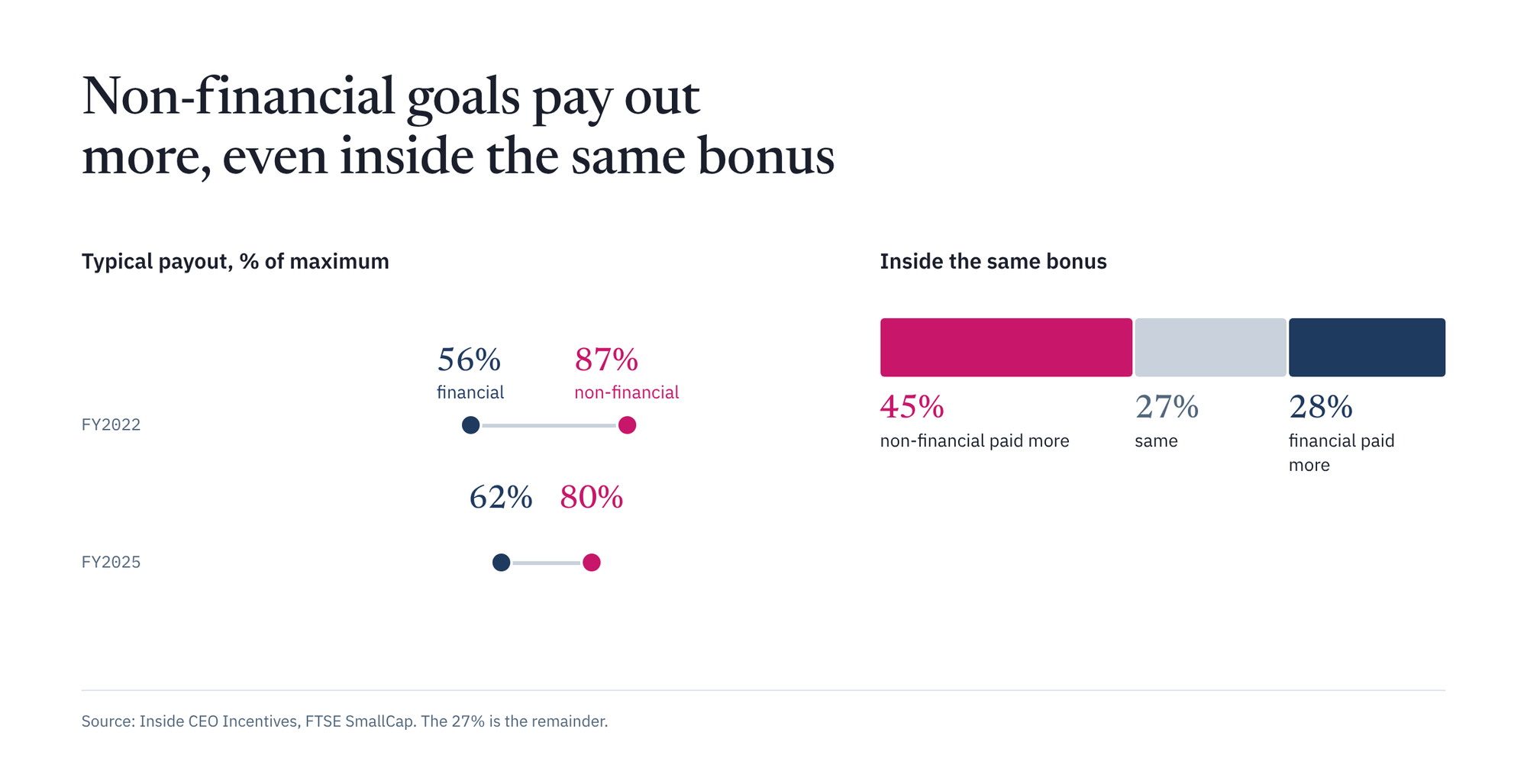
About half of strategic, personal and ESG bonus goals have no numerical target. Non-financial measures also pay out more generously: even within the same bonus plan, they pay out an average of 11 percentage points more of their maximum than financial measures. This was true in both FY2022 and FY2025.
Carbon enters long-term incentives
Not all of the IA's expectations have become less prescriptive. The revised guidance is more explicit about building material ESG factors into long-term incentives, with targets that are quantifiable and appropriately stretching.
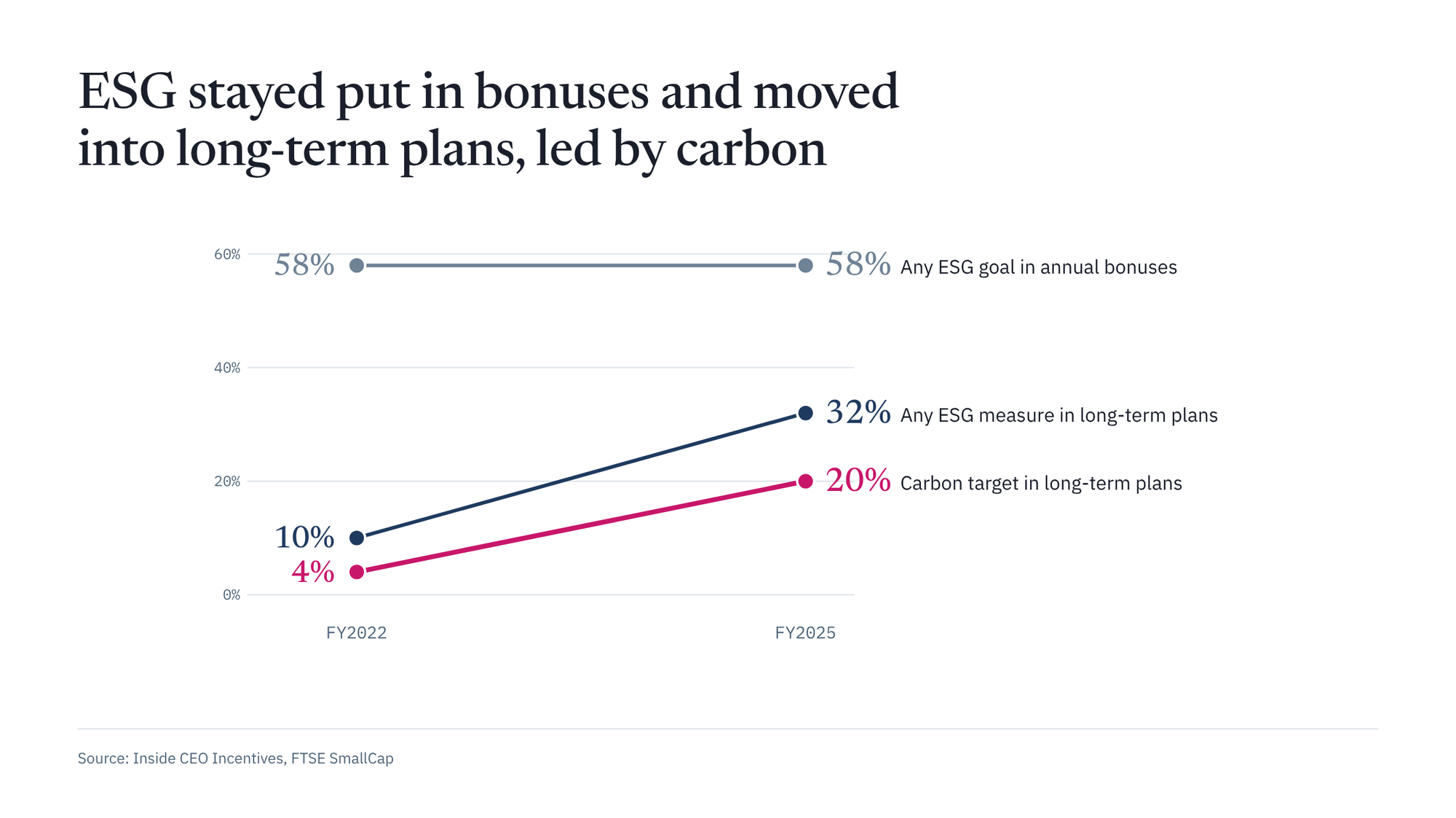
This is also where SmallCap incentive design changed most. The share of long-term incentive plans with a carbon emissions target rose fivefold, from 4% to 20%. Carbon now accounts for about half of all ESG measures in long-term plans, typically requiring emissions cuts of 10% to 25%. Annual bonuses use a broader set of ESG goals, including employee engagement, culture and safety.
Long-term plans remain standardised
Three quarters of long-term incentive plans use shareholder returns relative to peers. Nine in ten of these targets start paying at the peer median and pay in full at the upper quartile. The standard design, three years of performance followed by two years of holding, is still firmly in place.